Category: Ai News

  • Chatbots tell us what we want to hear

    Using AI Chatbots to examine leaked data

    chatbot architecture

    Alon Gal, Hudson Rock’s CTO, said the idea was to make the data easier to search and understand. She says it’s crucial that we continue to value the not-so-pleasant aspects of human relationships. “Avatars can make you feel that human relationships are just too much stress,” Turkle reflected. But stress, friction, pushback and vulnerability are what allow us to experience a full range of emotions.

    Key Features of the Custom Siri Chatbot

    Otherwise, we risk getting mired in vexing debates about the nature of consciousness without ever addressing concrete ways of testing AIs. For example, we should look at tests involving measures of integrated information—a measure of how components of a system combine information—as well as my AI consciousness test (ACT test). Developed with Edwin Turner of Princeton, ACT offers a battery of natural language questions that can be given to chatbots to determine if they have experience when they are at the R & D stage, before they are trained on information about consciousness. AI developers can train chatbots to extract clues from questions and identify people’s biases, Xiao said. Once a chatbot knows what a person likes or doesn’t like, it can tailor its responses to match. To see how chatbots influence online searches, the team compared how people interacted with different search systems and how they felt about controversial issues before and after using them.

    Today, with generative AI enabling chatbots to personalize their responses to us, Turkle is examining just how far these emotional connections can go… Why humans are becoming so attached to insentient machines, and the psychological impacts of these relationships. We’re less likely to have heart problems, suffer from depression, develop chronic illnesses — we even live longer. Now, thanks to advances in AI, chatbots can act as personalized therapists, companions, and romantic partners. Mainly because, as demonstrated above, Apple’s LLM-powered chatbot is prone to hallucinations and often gives confident wrong answers.

    • Although OpenAI notes it may not grant every request since it must balance privacy requests against freedom of expression “in accordance with applicable laws”.
    • Some people theorized that Google could lose its value as the No. 1 search engine because of the early success of the chatbot.
    • Creating clear evaluation metrics to measure how well AI chatbots work in healthcare is important.
    • Studies indicate that when chatbots are effectively integrated, they can assist healthcare providers by automating routine tasks, such as appointment scheduling and medication reminders, thus freeing up staff for more complex patient interactions.
    • But you can try it out if you want, which is as close to a demo as we’re going to get.
    • Several marketplaces host and provide ChatGPT prompts, either for free or for a nominal fee.

    Making Augmented Reality Accessible: a Case Study of Lens in Maps

    chatbot architecture

    It gets some stuff right, but most of the responses include irrelevant words or phrases. I don’t speak the rest of the languages supported to test how well it knows them, but I assume it’s only proficient in English. When asked to compare the feature sets offered by WhatsApp and Telegram, it provided a well-formatted list breaking down the main options. Also, for some reason, the chatbot sometimes randomly answered in German even when my queries were explicitly sent in American English.

    • The Responses API effectively replaces OpenAI’s Assistants API, which the company plans to discontinue in the first half of 2026.
    • Explore insights, real-world best practices and solutions in software development & leadership.
    • However, challenges remain, particularly concerning interoperability and data security.
    • Furthermore, it highlights a broader range of applications for chatbots beyond traditional uses, showcasing their versatility in areas like mental health support and chronic disease management, indicating an evolution in the technology’s capabilities.
    • However, beyond architects, only a few possess the technical expertise to read the plans, while even fewer can afford to build them.

    Although the First Amendment also protects non-human corporations’ speech, corporations are formed by humans, they noted. And unlike corporations, chatbots have no intention behind their outputs, her legal team argued, instead simply using a probabilistic approach to generate text. Accusing the mother of the departed teen, Megan Garcia, of attempting to “insert this Court into the conversations of millions of C.AI users” and supposedly endeavoring to “shut down” C.AI, the chatbot maker argued that the First Amendment bars all of her claims.

    It also imposes on AI companies the same responsibility born by manufacturers when a defective product causes harm. A good way to think about these AI systems is that they behave like a “crowdsourced neocortex”—a system with intelligence that emerges from training on extraordinary amounts of human data, enabling it to effectively mimic the thought patterns of humans. That is, as chatbots grow more and more sophisticated, their internal workings come to mirror those of the human populations whose data they assimilated. The complex conceptual map chatbots encode, as they grow more sophisticated, is something specialists are only now beginning to understand.

    chatbot architecture

    OpenAI unveils Flex processing for cheaper, slower AI tasks

    The study in 13 proposed methodology introduces structured information for chatbot development, enabling intent-based dialogue with a narrative focus. This method guides users along curated itineraries, enhancing user interaction and engagement considerably. It employs an algorithm for map ping exhibit data to chatbot intents and integrates with the Dialog Flow engine, allowing for automated information retrieval. OpenAI made a notable change to its content moderation policies after the success of its new image generator in ChatGPT, which went viral for being able to create Studio Ghibli-style images.

    chatbot architecture

    Additionally, Siri lacks the ability to save conversation history, which limits its utility as a productivity tool. Its inability to seamlessly integrate with advanced tools like ChatGPT or handle complex data parsing further restricts its potential for sophisticated applications. Training the bot on the user’s preferred content makes the experience truly personalized, but the fact that it all happens locally keeps user data private. Chat with RTX can return fast responses while keeping all user information secure because it doesn’t rely on cloud-based services, which means it can also run without an internet connection. Earlier this week, Anthropic rolled out a web search feature for its AI-powered chatbot platform, Claude, bringing the bot in line with many of its rivals. It wasn’t immediately clear which search index might be powering the feature — one possibility was that Anthropic had developed its own.

    This content is in the AI, ML & Data Engineering topic

    With 25+ technical talks, uncover practical strategies for AI-native development, resilient and secure architectures, serverless adoption, platform engineering, and more. Visual ChatGPT can not directly read images, but it has a list of tools to finish different visual tasks. Each image will have a filename formed as “image/xxx.png”, and Visual ChatGPT can invoke different tools to indirectly understand pictures. An open system incorporating different VFMs and enabling users to interact with ChatGPT beyond language format. To build such a system, we meticulously design a series of prompts to help inject the visual information into ChatGPT, which thus can solve the complex visual questions step-by-step. This system provides an interactive and user-friendly platform for predicting a patient’s disease.

    “Creating agents that always present opinions from the other side is the most obvious intervention, but we found they don’t work.” Chatbots share limited information, reinforce ideologies, and, as a result, can lead to more polarized thinking when it comes to controversial issues, according to new Johns Hopkins University–led research. Understand emerging trends like advanced AI/ML integration, FinOps, modern security practices & team leadership.

    chatbot architecture

    The Impact of AI Tools on Architecture in 2024 (and Beyond)

    It’s a tool powered by ChatGPT, designed specifically to help threat intelligence researchers dig through the leak without spending days buried in raw data. The study, which is the first to examine the experience of users who have been negatively affected by companion chatbots, will be presented at the Association for Computing Machinery’s Computer-Supported Cooperative Work and Social Computing Conference this fall. According to Mozilla, as soon as a user begins chatting with a bot, thousands of trackers go to work collecting data about them, including any private thoughts they shared. Mozilla found that users have little to no control over how their data is used, whether it gets sent to third-party marketers and advertisers, or is used to train AI models. It’s notable, she suggested, that the chatbot maker updated its safety features following the death of Garcia’s son, Sewell Setzer.

    OpenAI is currently in the early stages of developing its own social media platform to compete with Elon Musk’s X and Mark Zuckerberg’s Instagram and Threads, according to The Verge. It is unclear whether OpenAI intends to launch the social network as a standalone application or incorporate it into ChatGPT. OpenAI leaders have been talking about allowing the open model to link up with OpenAI’s cloud-hosted models to improve its ability to respond to intricate questions, two sources familiar with the situation told TechCrunch. OpenAI has started using Google’s AI chips to power ChatGPT and other products, as reported by Reuters. The ChatGPT maker is one of the biggest buyers of Nvidia’s GPUs, using the AI chips to train models, and this is the first time that OpenAI is using non-Nvidia chips in an important way. CEO Sam Altman said that the company is delaying the release of its open model, which had already been postponed by a month earlier this summer.

  • Why Is AI Image Recognition Important and How Does it Work?

    What is Image Recognition their functions, algorithm

    how does ai recognize images

    Its impact extends across industries, empowering innovations and solutions that were once considered challenging or unattainable. These include image classification, object detection, image segmentation, super-resolution, and many more. Image recognition algorithms are able to accurately detect and classify objects thanks to their ability to learn from previous examples. This opens the door for applications in a variety of fields, including robotics, surveillance systems, and autonomous vehicles.

    Customers can take a photo of an item and use image recognition software to find similar products or compare prices by recognizing the objects in the image. Image recognition is an application that has infiltrated a variety of industries, showcasing its versatility and utility. In the field of healthcare, for instance, image recognition could significantly enhance diagnostic procedures. By analyzing medical images, such as X-rays or MRIs, the technology can aid in the early detection of diseases, improving patient outcomes. Similarly, in the automotive industry, image recognition enhances safety features in vehicles. Cars equipped with this technology can analyze road conditions and detect potential hazards, like pedestrians or obstacles.

    The softmax function’s output probability distribution is then compared to the true probability distribution, which has a probability of 1 for the correct class and 0 for all other classes. You don’t need any prior experience with machine learning to be able to follow along. The example code is written in Python, so a basic knowledge of Python would be great, but knowledge of any other programming language is probably enough. Another example is a company called Sheltoncompany Shelton which has a surface inspection system called WebsSPECTOR, which recognizes defects and stores images and related metadata. When products reach the production line, defects are classified according to their type and assigned the appropriate class.

    Argmax of logits along dimension 1 returns the indices of the class with the highest score, which are the predicted class labels. The labels are then compared to the correct class labels by tf.equal(), which returns a vector of boolean values. The booleans are cast into float values (each being either 0 or 1), whose average is the fraction of correctly predicted images. Only then, when the model’s parameters can’t be changed anymore, we use the test set as input to our model and measure the model’s performance on the test set. Even though the computer does the learning part by itself, we still have to tell it what to learn and how to do it.

    Image Generation

    Deep learning recognition methods can identify people in photos or videos even as they age or in challenging illumination situations. In this case, a custom model can be used to better learn the features of your data and improve performance. Alternatively, you may be working on a new application where current image recognition models do not achieve the required accuracy or performance. What data annotation in AI means in practice is that you take your dataset of several thousand images and add meaningful labels or assign a specific class to each image.

    how does ai recognize images

    In the case of single-class image recognition, we get a single prediction by choosing the label with the highest confidence score. In the case of multi-class recognition, final labels are assigned only if the confidence score for each label is over a particular threshold. Often referred to as “image classification” or “image labeling”, this core task is a foundational component in solving many computer vision-based machine learning problems. After the training has finished, the model’s parameter values don’t change anymore and the model can be used for classifying images which were not part of its training dataset. How can we get computers to do visual tasks when we don’t even know how we are doing it ourselves? Instead of trying to come up with detailed step by step instructions of how to interpret images and translating that into a computer program, we’re letting the computer figure it out itself.

    This is what allows it to assign a particular classification to an image, or indicate whether a specific element is present. In conclusion, AI image recognition has the power to revolutionize how we interact with and interpret visual media. With deep learning algorithms, advanced databases, and a wide range of applications, businesses and consumers can benefit from this technology. Choosing the right database is crucial when training an AI image recognition model, as this will impact its accuracy and efficiency in recognizing specific objects or classes within the images it processes. With constant updates from contributors worldwide, these open databases provide cost-effective solutions for data gathering while ensuring data ethics and privacy considerations are upheld. In conclusion, image recognition software and technologies are evolving at an unprecedented pace, driven by advancements in machine learning and computer vision.

    Inception networks were able to achieve comparable accuracy to VGG using only one tenth the number of parameters. Image recognition is one of the most foundational and widely-applicable computer vision tasks. Brandon is an expert in obscure memes and how meme culture has evolved over the years. You can find him either vehemently defending Hideo Kojima online or watching people be garbage to each other on Twitter. His specialties include scathing reviews of attempts to abuse meme culture, as well as breaking things down into easy to understand metaphors.

    It’s not necessary to read them all, but doing so may better help your understanding of the topics covered. Every neural network architecture has its own specific parts that make the difference between them. Also, neural networks in every computer vision application have some unique features and components. For example, Google Cloud Vision offers a variety of image detection services, which include optical character and facial recognition, explicit content detection, etc., and charges fees per photo. Microsoft Cognitive Services offers visual image recognition APIs, which include face or emotion detection, and charge a specific amount for every 1,000 transactions. With social media being dominated by visual content, it isn’t that hard to imagine that image recognition technology has multiple applications in this area.

    Image search recognition, or visual search, uses visual features learned from a deep neural network to develop efficient and scalable methods for image retrieval. The goal in visual search use cases is to perform content-based retrieval of images for image recognition online applications. This AI vision platform supports the building and operation of real-time applications, the use of neural networks for image recognition tasks, and the integration of everything with your existing systems. Image recognition work with artificial intelligence is a long-standing research problem in the computer vision field. While different methods to imitate human vision evolved, the common goal of image recognition is the classification of detected objects into different categories (determining the category to which an image belongs).

    Best image recognition models

    It will most likely say it’s 77% dog, 21% cat, and 2% donut, which is something referred to as confidence score. To see just how small you can make these networks with good results, check out this post on creating a tiny image recognition model for mobile devices. The success of AlexNet and VGGNet opened the floodgates of deep learning research. As architectures got larger and networks got deeper, however, problems started to arise during training. When networks got too deep, training could become unstable and break down completely. AI Image recognition is a computer vision technique that allows machines to interpret and categorize what they “see” in images or videos.

    For example, an image recognition program specializing in person detection within a video frame is useful for people counting, a popular computer vision application in retail stores. As with many tasks that rely on human intuition and experimentation, however, someone eventually asked if a machine could do it better. Neural architecture search (NAS) uses optimization techniques to automate the process of neural network design.

    You can streamline your workflow process and deliver visually appealing, optimized images to your audience. There are a few steps that are at the backbone of how image recognition systems work. Image Recognition AI is the task of identifying objects of interest within an image and recognizing which category the image belongs to. Image recognition, photo recognition, and picture recognition are terms that are used interchangeably. You can tell that it is, in fact, a dog; but an image recognition algorithm works differently.

    Usually, the labeling of the training data is the main distinction between the three training approaches. Today, computer vision has benefited enormously from deep learning technologies, excellent development tools, image recognition models, comprehensive open-source databases, and fast and inexpensive computing. By integrating these generative AI capabilities, image recognition systems have made significant strides in accuracy, flexibility, and overall performance.

    Image recognition is also helpful in shelf monitoring, inventory management and customer behavior analysis. It can assist in detecting abnormalities in medical scans such as MRIs and X-rays, even when they are in their earliest stages. It also helps healthcare professionals identify and track patterns in tumors or other anomalies in medical images, leading to more accurate diagnoses and treatment planning. These developments are part of a growing trend towards expanded use cases for AI-powered visual technologies.

    We use a measure called cross-entropy to compare the two distributions (a more technical explanation can be found here). The smaller the cross-entropy, the smaller the difference between the predicted probability distribution https://chat.openai.com/ and the correct probability distribution. But before we start thinking about a full blown solution to computer vision, let’s simplify the task somewhat and look at a specific sub-problem which is easier for us to handle.

    The image of a vomiting horse, which was first posted en masse on Konami’s social media posts, is an AI-generated image of just a horse in a store, appearing to throw up. How people knew that it was created by artificial intelligence was quite obvious because horses physically are incapable of throwing up, their throat muscles don’t work that way. AI models are often trained on huge libraries of images, many of which are watermarked by photo agencies or photographers.

    The first steps toward what would later become image recognition technology happened in the late 1950s. An influential 1959 paper is often cited as the starting point to the basics of image recognition, though it had no direct relation to the algorithmic aspect of the development. Image recognition aids computer vision in accurately identifying things in the environment. Because image recognition is critical for computer vision, we must learn more about it. Visual Search, as a groundbreaking technology, not only allows users to do real-time searches based on visual clues but also improves the whole search experience by linking the physical and digital worlds.

    AI Image recognition is a computer vision task that works to identify and categorize various elements of images and/or videos. Image recognition models are trained to take an image as input and output one or more labels describing the image. Along with a predicted class, image recognition models may also output a confidence score related to how certain the model is that an image belongs to a class.

    Object recognition algorithms use deep learning techniques to analyze the features of an image and match them with pre-existing patterns in their database. For example, an object recognition system can identify a particular dog breed from its picture using pattern-matching algorithms. This level of detail is made possible through multiple layers within the CNN that progressively extract higher-level features from raw input pixels. For instance, an image recognition algorithm can accurately recognize and label pictures of animals like cats or dogs. Yes, image recognition can operate in real-time, given powerful enough hardware and well-optimized software.

    Other machine learning algorithms include Fast RCNN (Faster Region-Based CNN) which is a region-based feature extraction model—one of the best performing models in the family of CNN. Instance segmentation is the detection task that attempts to locate objects in Chat GPT an image to the nearest pixel. Instead of aligning boxes around the objects, an algorithm identifies all pixels that belong to each class. Image segmentation is widely used in medical imaging to detect and label image pixels where precision is very important.

    how does ai recognize images

    79.6% of the 542 species in about 1500 photos were correctly identified, while the plant family was correctly identified for 95% of the species. In the end, a composite result of all these layers is collectively taken into account when determining if a match has been found. Many of the most dynamic social media and content sharing communities exist because of reliable and authentic streams of user-generated content (USG). But when a high volume of USG is a necessary component of a given platform or community, a particular challenge presents itself—verifying and moderating that content to ensure it adheres to platform/community standards. Image recognition is a broad and wide-ranging computer vision task that’s related to the more general problem of pattern recognition. As such, there are a number of key distinctions that need to be made when considering what solution is best for the problem you’re facing.

    “It’s visibility into a really granular set of data that you would otherwise not have access to,” Wrona said. Image recognition plays a crucial role in medical imaging analysis, allowing healthcare professionals and clinicians more easily diagnose and monitor certain diseases and conditions. This is especially relevant when deployed in public spaces as it can lead to potential mass surveillance and infringement of privacy. It is also important for individuals’ biometric data, such as facial and voice recognition, that raises concerns about their misuse or unauthorized access by others.

    Image recognition is widely used in various fields such as healthcare, security, e-commerce, and more for tasks like object detection, classification, and segmentation. Image recognition is a mechanism used to identify objects within an image and classify them into specific categories based on visual content. Finally, generative AI plays a crucial role in creating diverse sets of synthetic images for testing and validating image recognition systems.

    Image recognition algorithms use deep learning datasets to distinguish patterns in images. This way, you can use AI for picture analysis by training it on a dataset consisting of a sufficient amount of professionally tagged images. While animal and human brains recognize objects with ease, computers have difficulty with this task. There are numerous ways to perform image processing, including deep learning and machine learning models.

    This contributes significantly to patient care and medical research using image recognition technology. You can foun additiona information about ai customer service and artificial intelligence and NLP. Furthermore, the efficiency of image recognition has been immensely enhanced by the advent of deep learning. Deep learning algorithms, especially CNNs, have brought about significant improvements in the accuracy and speed of image recognition tasks.

    how does ai recognize images

    AlexNet, named after its creator, was a deep neural network that won the ImageNet classification challenge in 2012 by a huge margin. The network, however, is relatively large, with over 60 million parameters and many internal connections, thanks to dense layers that make the network quite slow to run in practice. Generative models are particularly adept at learning the distribution of normal images within a given context. This knowledge can be leveraged to more effectively detect anomalies or outliers in visual data. This capability has far-reaching applications in fields such as quality control, security monitoring, and medical imaging, where identifying unusual patterns can be critical.

    Any AI system that processes visual information usually relies on computer vision, and those capable of identifying specific objects or categorizing images based on their content are performing image recognition. Single-shot detectors divide the image into a default number of bounding boxes in the form of a grid over different aspect ratios. The feature map that is obtained from the hidden layers of neural networks applied on the image is combined at the different aspect ratios to naturally handle objects of varying sizes. In 2012, a new object recognition algorithm was designed, and it ensured an 85% level of accuracy in face recognition, which was a massive step in the right direction. By 2015, the Convolutional Neural Network (CNN) and other feature-based deep neural networks were developed, and the level of accuracy of image Recognition tools surpassed 95%. Computer vision, on the other hand, is a broader phrase that encompasses the ways of acquiring, analyzing, and processing data from the actual world to machines.

    To this end, AI models are trained on massive datasets to bring about accurate predictions. The integration of deep learning algorithms has significantly improved the accuracy and efficiency of image recognition systems. These advancements mean that an image to see if matches with a database is done with greater precision and speed. One of the most notable achievements of deep learning in image recognition is its ability to process and analyze complex images, such as those used in facial recognition or in autonomous vehicles.

    At its core, image recognition is about teaching computers to recognize and process images in a way that is akin to human vision, but with a speed and accuracy that surpass human capabilities. Understanding the distinction between image processing and AI-powered image recognition is key to appreciating the depth of what artificial intelligence brings to the table. At its core, image processing is a methodology that involves applying various algorithms or mathematical operations to transform an image’s attributes. However, while image processing can modify and analyze images, it’s fundamentally limited to the predefined transformations and does not possess the ability to learn or understand the context of the images it’s working with. AI image recognition is a sophisticated technology that empowers machines to understand visual data, much like how our human eyes and brains do.

    Top 30 AI Projects for Aspiring Innovators: 2024 Edition – Simplilearn

    Top 30 AI Projects for Aspiring Innovators: 2024 Edition.

    Posted: Fri, 26 Jul 2024 07:00:00 GMT [source]

    This technique is particularly useful in medical image analysis, where it is essential to distinguish between different types of tissue or identify abnormalities. In this process, the algorithm segments an image into multiple parts, each corresponding to different objects or regions, allowing for a more detailed and nuanced analysis. Agricultural image recognition systems use novel techniques to identify animal species and their actions. Livestock can be monitored remotely for disease detection, anomaly detection, compliance with animal welfare guidelines, industrial automation, and more. Other face recognition-related tasks involve face image identification, face recognition, and face verification, which involves vision processing methods to find and match a detected face with images of faces in a database.

    This would result in more frequent updates, but the updates would be a lot more erratic and would quite often not be headed in the right direction. Gradient descent only needs a single parameter, the learning rate, which is a scaling factor for the size of the parameter updates. The bigger the learning rate, the more the parameter values change after each step. If the learning rate is too big, the parameters might overshoot their correct values and the model might not converge. If it is too small, the model learns very slowly and takes too long to arrive at good parameter values.

    So for these reasons, automatic recognition systems are developed for various applications. Driven by advances in computing capability and image processing technology, computer mimicry of human vision has recently gained ground in a number of practical applications. Image recognition algorithms compare three-dimensional models and appearances from various perspectives using edge detection. They’re frequently trained using guided machine learning on millions of labeled images. One of the most exciting advancements brought by generative AI is the ability to perform zero-shot and few-shot learning in image recognition. These techniques enable models to identify objects or concepts they weren’t explicitly trained on.

    How does the brain translate the image on our retina into a mental model of our surroundings? The convolutional layer’s parameters consist of a set of learnable filters (or kernels), which have a small receptive field. These filters scan through image pixels and gather information in the batch of pictures/photos. This is like the response of a neuron in the visual cortex to a specific stimulus.

    You need to find the images, process them to fit your needs and label all of them individually. The second reason is that using the same dataset allows us to objectively compare different approaches with each other. We are going to implement the program in Colab as we need a lot of processing power and Google Colab provides free GPUs.The overall structure of the neural network we are going to use can be seen in this image. So far, you have learnt how to use ImageAI to easily how does ai recognize images train your own artificial intelligence model that can predict any type of object or set of objects in an image. Google, Facebook, Microsoft, Apple and Pinterest are among the many companies investing significant resources and research into image recognition and related applications. Privacy concerns over image recognition and similar technologies are controversial, as these companies can pull a large volume of data from user photos uploaded to their social media platforms.

    Machine learning algorithms, especially those powered by deep learning models, have been instrumental in refining the process of identifying objects in an image. These algorithms analyze patterns within an image, enhancing the capability of the software to discern intricate details, a task that is highly complex and nuanced. Image recognition is the ability of computers to identify and classify specific objects, places, people, text and actions within digital images and videos. Image recognition is a technology under the broader field of computer vision, which allows machines to interpret and categorize visual data from images or videos. It utilizes artificial intelligence and machine learning algorithms to identify patterns and features in images, enabling machines to recognize objects, scenes, and activities similar to human perception.

    The human brain has a unique ability to immediately identify and differentiate items within a visual scene. Take, for example, the ease with which we can tell apart a photograph of a bear from a bicycle in the blink of an eye. When machines begin to replicate this capability, they approach ever closer to what we consider true artificial intelligence. Computer vision is what powers a bar code scanner’s ability to “see” a bunch of stripes in a UPC. It’s also how Apple’s Face ID can tell whether a face its camera is looking at is yours. Basically, whenever a machine processes raw visual input – such as a JPEG file or a camera feed – it’s using computer vision to understand what it’s seeing.

    Deep learning-powered visual search gives consumers the ability to locate pertinent information based on images, creating new opportunities for augmented reality, visual recommendation systems, and e-commerce. Unsupervised learning, on the other hand, involves training a model on unlabeled data. The algorithm’s objective is to uncover hidden patterns, structures, or relationships within the data without any predefined labels. The model learns to make predictions or classify new, unseen data based on the patterns and relationships learned from the labeled examples. However, the core of image recognition revolves around constructing deep neural networks capable of scrutinizing individual pixels within an image. Image recognition is a core component of computer vision that empowers the system with the ability to recognize and understand objects, places, humans, language, and behaviors in digital images.

    • Facial recognition is used as a prime example of deep learning image recognition.
    • It can assist in detecting abnormalities in medical scans such as MRIs and X-rays, even when they are in their earliest stages.
    • The relative order of its inputs stays the same, so the class with the highest score stays the class with the highest probability.
    • Many of the most dynamic social media and content sharing communities exist because of reliable and authentic streams of user-generated content (USG).
    • Whether it’s identifying objects in a live video feed, recognizing faces for security purposes, or instantly translating text from images, AI-powered image recognition thrives in dynamic, time-sensitive environments.

    VGG architectures have also been found to learn hierarchical elements of images like texture and content, making them popular choices for training style transfer models. Popular image recognition benchmark datasets include CIFAR, ImageNet, COCO, and Open Images. Though many of these datasets are used in academic research contexts, they aren’t always representative of images found in the wild. In object detection, we analyse an image and find different objects in the image while image recognition deals with recognising the images and classifying them into various categories. Image recognition refers to technologies that identify places, logos, people, objects, buildings, and several other variables in digital images. It may be very easy for humans like you and me to recognise different images, such as images of animals.

    Lastly, reinforcement learning is a paradigm where an agent learns to make decisions and take actions in an environment to maximize a reward signal. The agent interacts with the environment, receives feedback in the form of rewards or penalties, and adjusts its actions accordingly. The system is supposed to figure out the optimal policy through trial and error. Image recognition benefits the retail industry in a variety of ways, particularly when it comes to task management.

    The image recognition technology helps you spot objects of interest in a selected portion of an image. Visual search works first by identifying objects in an image and comparing them with images on the web. With image recognition, a machine can identify objects in a scene just as easily as a human can — and often faster and at a more granular level. And once a model has learned to recognize particular elements, it can be programmed to perform a particular action in response, making it an integral part of many tech sectors.

    With this AI model image can be processed within 125 ms depending on the hardware used and the data complexity. Given that this data is highly complex, it is translated into numerical and symbolic forms, ultimately informing decision-making processes. Every AI/ML model for image recognition is trained and converged, so the training accuracy needs to be guaranteed. Object detection is detecting objects within an image or video by assigning a class label and a bounding box.

    OpenCV is an incredibly versatile and popular open-source computer vision and machine learning software library that can be used for image recognition. In conclusion, the workings of image recognition are deeply rooted in the advancements of AI, particularly in machine learning and deep learning. The continual refinement of algorithms and models in this field is pushing the boundaries of how machines understand and interact with the visual world, paving the way for innovative applications across various domains. For surveillance, image recognition to detect the precise location of each object is as important as its identification.

    In this section, we’ll look at several deep learning-based approaches to image recognition and assess their advantages and limitations. The combination of AI and ML in image processing has opened up new avenues for research and application, ranging from medical diagnostics to autonomous vehicles. The marriage of these technologies allows for a more adaptive, efficient, and accurate processing of visual data, fundamentally altering how we interact with and interpret images. Training image recognition systems can be performed in one of three ways — supervised learning, unsupervised learning or self-supervised learning.

    Image recognition also promotes brand recognition as the models learn to identify logos. A single photo allows searching without typing, which seems to be an increasingly growing trend. Detecting text is yet another side to this beautiful technology, as it opens up quite a few opportunities (thanks to expertly handled NLP services) for those who look into the future. These powerful engines are capable of analyzing just a couple of photos to recognize a person (or even a pet). For example, with the AI image recognition algorithm developed by the online retailer Boohoo, you can snap a photo of an object you like and then find a similar object on their site. This relieves the customers of the pain of looking through the myriads of options to find the thing that they want.

    These include bounding boxes that surround an image or parts of the target image to see if matches with known objects are found, this is an essential aspect in achieving image recognition. This kind of image detection and recognition is crucial in applications where precision is key, such as in autonomous vehicles or security systems. As the world continually generates vast visual data, the need for effective image recognition technology becomes increasingly critical.

    It keeps doing this with each layer, looking at bigger and more meaningful parts of the picture until it decides what the picture is showing based on all the features it has found. In addition, using facial recognition raises concerns about privacy and surveillance. The possibility of unauthorized tracking and monitoring has sparked debates over how this technology should be regulated to ensure transparency, accountability, and fairness. This could have major implications for faster and more efficient image processing and improved privacy and security measures.

    The heart of an image recognition system lies in its ability to process and analyze a digital image. This process begins with the conversion of an image into a form that a machine can understand. Typically, this involves breaking down the image into pixels and analyzing these pixels for patterns and features. The role of machine learning algorithms, particularly deep learning algorithms like convolutional neural networks (CNNs), is pivotal in this aspect.

    Popular apps like Google Lens and real-time translation apps employ image recognition to offer users immediate access to important information by analyzing images. Visual search, which leverages advances in image recognition, allows users to execute searches based on keywords or visual cues, bringing up a new dimension in information retrieval. Overall, CNNs have been a revolutionary addition to computer vision, aiding immensely in areas like autonomous driving, facial recognition, medical imaging, and visual search.

    At the heart of computer vision is image recognition which allows machines to understand what an image represents and classify it into a category. Visual search uses features learned from a deep neural network to develop efficient and scalable methods for image retrieval. The goal of visual search is to perform content-based retrieval of images for image recognition online applications.

  • Top 10 Chatbots in Healthcare: Insights & Use Cases in 2024

    Chatbots in Healthcare: Improving Patient Engagement and Experience

    chatbot use cases in healthcare

    These alerts allow users to respond quickly, potentially stopping fraudulent activities. Chatbots can send automated notifications about account balances, upcoming bills, and due dates, ensuring customers are always aware of their financial status. This feature is particularly helpful in avoiding late payments and managing cash flow effectively. But, these aren’t all the ways you can use your bots as there are hundreds of those depending on your company’s needs. Once you choose your chatbot and set it up, make sure to check all the features the bot offers.

    chatbot use cases in healthcare

    The weight loss advice that Tessa provided was not part of the data that the AI tool was meant to be trained on. While building futuristic healthcare chatbots, companies will have to think beyond technology. They will need to carefully consider various factors that can impact the user adoption of chatbots in the healthcare industry. Only then will we be able to unlock the power of AI-enabled conversational healthcare. Using chatbots for healthcare helps patients to contact the doctor for major issues.

    Letting chatbots handle some sales of your services from social media platforms can increase the speed of your company’s growth. Voice bots facilitate customers with a seamless experience on your online store website, on social media, and on messaging platforms. They engage customers with artificial intelligence communication and offer personalized solutions to shoppers’ requests. But then it can provide the client with your business working hours if it’s past that time, or transfer the customer to one of your human agents if they’re available. Or maybe you just need a bot to let people know when will the customer support team be available next. You don’t have to employ people from different parts of the world or pay overtime for your agents to work nights anymore.

    Use cases for healthcare chatbots vary from diagnosis and mental health support to more routine tasks like scheduling and medication reminders. In a world where an anxiety attack can happen at any time, you can rest easy knowing that you have AI-powered chatbots in healthcare to rely on. Healthcare chatbots are AI-enabled digital assistants that allow patients to assess their health and get reliable results anywhere, anytime. It manages appointment scheduling and rescheduling while gently reminding patients of their upcoming visits to the doctor.

    You can improve your spending habits with the first two and increase your account’s security with the last one. People can add transactions to the created expense report directly from the bot to make the tracking even more accurate. Depending on the relevance of the report, users can also either approve or reject it. Another great chatbot use case in banking is that they can track users’ expenses and create reports from them. They can track the customer journey to find the person’s preferences, interests, and needs.

    Top 10 chatbots in healthcare

    For those who cannot read or who have reading levels lower than that of the chatbot, they will also face barriers to using them. Coghlan and colleagues (2023)7 outlined some important considerations when choosing to use chatbots in health care. Developers and professionals seeking to implement chatbots should weigh the risks and benefits by clearly defining the aim of the chatbot and the problem to be solved in their circumstances. There should be careful assessment of the problem to be solved to determine whether the use of AI or chatbots is an appropriate solution. There may be instances in which the benefits of implementation are too low or the risks are too high to justify replacing humans.7 The use of chatbots in health care requires an evidence-based approach. The appropriate evidence to support the safe and effective use of chatbots for the intended purpose and population should be gathered and incorporated before implementation.

    A chatbot can lead a new customer through the registration process, explain the points system of a loyalty program, and highlight special offers or benefits available. It can also answer any questions the customer might have about the service, improving their understanding and engagement from the outset. An example could involve a retail chatbot deployed on a platform like Instagram. It could automatically interact with users commenting on posts, ask engaging questions, and offer personalized shopping suggestions based on the user’s interaction history and preferences.

    Hence, it’s very likely to persist and prosper in the future of the healthcare industry. The world witnessed its first psychotherapist chatbot in 1966 when Joseph Weizenbaum created ELIZA, a natural language processing program. It used pattern matching and substitution methodology to give responses, but chatbot use cases in healthcare limited communication abilities led to its downfall. Healthcare chatbots automate the information-gathering process while boosting patient engagement. If you wish to know anything about a particular disease, a healthcare chatbot can gather correct information from public sources and instantly help you.

    This is partly because Conversational AI is still evolving and has a long way to go. As natural language understanding and artificial intelligence technologies evolve, we will see the emergence of more sophisticated healthcare chatbot solutions. Medical chatbots are AI-powered conversational solutions that help patients, insurance companies, and healthcare providers easily connect with each other. These bots can also play a critical role in making relevant healthcare information accessible to the right stakeholders, at the right time. Chatbots simplify the process of scheduling healthcare appointments by allowing patients to book, reschedule, or cancel appointments autonomously through a conversational interface.

    If the answer is yes, make changes to your bot to improve the customer satisfaction of the users. This will help healthcare professionals see the long-term condition of their patients and create a better treatment for them. Also, the person can remember more details to discuss during their appointment with the use of notes and blood sugar readings.

    For example, a chatbot on an ecommerce site might answer questions about return policies, payment options, and shipping details. FAQ chatbots efficiently handle frequently asked questions, responding instantly to common queries. This capability significantly enhances the customer experience by reducing wait times and freeing up human agents to deal with more complex issues. Conversational AI consultations are based on a patient’s previously recorded medical history.

    Daunting numbers and razor-thin margins have forced health systems to do more with less. Many are finding that adding an automation component to the innovation strategy can be a game-changer by cost-effectively improving operations throughout the organization to the benefit of both staff and patients. Embracing new technologies – such as robotic process automation enabled with chatbots – is key to achieving the interdependent goals of reducing costs and serving patients better. Perfecting the use cases mentioned above would provide patients with comfortable, secure, and reliable conversations with their healthcare providers.

    chatbot use cases in healthcare

    This can save you customer support costs and improve the speed of response to boost user experience. These AI-powered virtual assistants offer a diverse range of chatbot use cases that optimize customer interactions, boost sales, and streamline operations. In this article, we will explore how chatbots in healthcare can improve patient engagement and experience and streamline internal and external support. They can automate bothersome and time-consuming tasks, like appointment scheduling or consultation. An AI chatbot can be integrated with third-party software, enabling them to deliver proper functionality. One of the most popular conversational AI real life use cases is in the healthcare industry.

    A healthcare chatbot can also be used to quickly triage users who require urgent care by helping patients identify the severity of their symptoms and providing advice on when to seek professional help. Chatbots can recognize warning signs of mental health issues, such as depression and anxiety, through conversational analysis. This enables medical services to intervene earlier on in cases where a patient may be at risk of developing a mental health condition or require further support.

    Conversational chatbots

    If the customer shows interest in historical fiction, the chatbot might suggest the latest bestsellers in that genre, books by similar authors, or even upcoming titles with special pre-order prices. This makes the shopping experience more personalized and helps the customer discover products they might not have found on their own. Imagine a scenario where a customer wishes to return a product they bought online. A chatbot could handle the interaction by asking for the order number, reasons for the return, and preference for refund or replacement, all while providing packaging and shipping information. This chatbot then schedules a pickup time that suits the customer, completing the process efficiently without any human intervention. Ecommerce chatbots serve as dynamic tools in online shopping, streamlining operations and boosting customer satisfaction.

    chatbot use cases in healthcare

    Chatbots will not replace doctors in medicine anytime soon, but they will likely become indispensable tools in patient care as AI continues to undergo major breakthroughs. While there are some challenges left to be addressed, we’re more than excited to see how the future of chatbots in healthcare unfolds. Let’s dive a little deeper and talk about a couple of the top chatbot use cases in healthcare. It features many tools, such as online doctor consultations, appointment settings, and, most importantly, a symptom checker. Chatbot becomes a vital point of communication and information gathering at unforeseeable times like a pandemic as it limits human interaction while still retaining patient engagement.

    With the growing spread of the disease, there comes a surge of misinformation and diverse conspiracy theories, which could potentially cause the pandemic curve to keep rising. Therefore, it has become necessary to leverage digital tools that disseminate authoritative healthcare information to people across the globe. Before chatbots, we had text messages that provided a convenient interface for communicating with friends, loved ones, and business partners. In fact, the survey findings reveal that more than 82 percent of people keep their messaging notifications on. After reading this blog, you will hopefully walk away with a solid understanding that chatbots and healthcare are a perfect match for each other. And there are many more chatbots in medicine developed today to transform patient care.

    Ada is an app-based symptom checker created by medical professionals, featuring a comprehensive medical library on the app. Patients can also quickly refer to their electronic medical records, securely stored in the app. The app also helps assess their general health with its quick health checker and book medical appointments.

    Healthcare chatbots are AI-powered virtual assistants that provide personalized support to patients and healthcare providers. They are designed to simulate human-like conversation, enabling patients to interact with them as they would with a real person. These chatbots are trained on healthcare-related data and can respond to many patient inquiries, including appointment scheduling, prescription refills, and symptom checking. Today, chatbots have emerged as powerful AI-driven tools with diverse applications across various industries.

    Imagine that a patient has some unusual symptoms and doesn’t know what’s wrong. Before they panic or call in to have a visit with you, they can go on your app and ask the chatbot for medical assistance. For example, if your patient is using the medication reminder already, you can add a symptom check for each of the reminders. So, for diabetic treatment, the chatbot can ask if the patient had any symptoms during the day.

    Moreover, chatbots streamline administrative processes by automating appointment scheduling tasks, freeing up staff time for more critical responsibilities. Moreover, healthcare chatbots are being integrated with Electronic Health Records (EHRs), enabling seamless access to patient data across various healthcare systems. This integration fosters better patient care and engagement, as medical history and patient preferences are readily available to healthcare providers, ensuring more personalized and informed care. The growing demand for virtual healthcare, accelerated by the global pandemic, has further propelled the adoption of healthcare chatbots. These AI-driven platforms have become essential tools in the digital healthcare ecosystem, enabling patients to access a range of healthcare services online from the comfort of their homes.

    Since a chatbot is available at all hours, users are able to access medical services or information when it’s most convenient for them, reducing the burden on staff. Chatbots can be used to automate healthcare processes and smooth out workflow, reducing manual labor and freeing up time for medical staff to focus on more complex tasks and procedures. This global experience will impact the healthcare industry’s dependence on chatbots, and might provide broad and new chatbot implementation opportunities in the future. Chatbots are transforming the insurance industry by simplifying processes and improving customer service. For example, a guest could use a hotel’s chatbot to request a room setup with specific lighting, a certain room temperature, and a selection of pillows. The chatbot could also offer additional services like spa appointments or dinner reservations, all from the same interface.

    Trained on clinical data from more than 18,000 medical articles and journals, Buoy’s chatbot for medical diagnosis provides users with their likely diagnoses and accurate answers to their health questions. Machine learning applications are beginning to transform patient care as we know it. Although still https://chat.openai.com/ in its early stages, chatbots will not only improve care delivery, but they will also lead to significant healthcare cost savings and improved patient care outcomes in the near future. One author screened the literature search results and reviewed the full text of all potentially relevant studies.

    For instance, if a patient reports severe chest pain, the chatbot can quickly recognize it as a potential heart attack symptom and advise seeking emergency medical assistance at the hospital. During COVID, chatbots aided in patient triage by guiding them to useful information, directing them about how to receive help, and assisting them to find vaccination locations. A chatbot can also help patients to shortlist relevant doctors/physicians and schedule an appointment. A healthcare chatbot is a sophisticated blend of artificial intelligence and healthcare expertise designed to transform patient care and administrative tasks.

    All these platforms, except for Slack, provide a Quick Reply as a suggested action that disappears once clicked. Users choose quick replies to ask for a location, address, email, or simply to end the conversation. However, humans rate a process not only by the outcome but also by how easy and straightforward the process is.

    Furthermore, this rule requires that workforce members only have access to PHI as appropriate for their roles and job functions. Before designing a conversational pathway for an AI driven healthcare bot, one must first understand what makes a productive conversation. Healthcare chatbot development can be a real challenge for someone with no experience in the field. Babylon Health offers AI-driven consultations with a virtual doctor, a patient chatbot, and a real doctor. There have been times when chatbots have provided information that could be considered harmful to the user.

    The medical chatbot matches users’ inquiries against a large repository of evidence-based medical data to provide simple answers. This medical diagnosis chatbot also offers additional med info for every symptom you input. Buoy Health was built by a team of doctors and AI developers through the Harvard Innovation Laboratory.

    Chatbot Ensures Quick Access To Vital Details

    This would deliver immediate value to the customer and reduce the call volumes experienced by human agents. Offering 24/7 customer support through chatbots ensures that help is always available, regardless of the time or day. This is especially important in our increasingly globalized world, where customers may be in different time zones or prefer shopping during off-hours. A chatbot is essentially a software application built to chat with users, mimicking human-like conversations. It uses AI to interpret and respond to messages, making interactions as smooth and natural as possible. Also, make sure that you check customer feedback where shoppers tell you what they want from your bot.

    Based on these preferences, the chatbot can suggest a tailored travel itinerary, book flights and hotels, and even recommend local experiences. These bots can automatically record transactions and categorize them into different expense heads, making it easier for users to keep track of their spending and manage their budgets. For example, a chatbot could analyze a customer’s spending over the past year and identify trends, such as increased spending on dining out or entertainment. This analysis helps customers make smarter financial decisions and potentially find ways to save money. A hypothetical use case might involve a chatbot for a retail clothing store that sends a message alerting customers about a newly arrived collection that matches their style preferences. This proactive approach boosts sales and enhances customer loyalty by showing attentiveness to individual customer preferences.

    Patients can communicate with chatbots to seek information about their conditions, medications, or treatment plans anytime they need it. These interactions promote better understanding and empower individuals to actively participate in managing their health. Moreover, regular check-ins from chatbots remind patients about medication schedules and follow-up appointments, leading to improved treatment adherence. The language processing capabilities of chatbots enable them to understand user queries accurately. Through natural language understanding algorithms, these virtual assistants can decipher the intent behind the questions posed by patients.

    If the issue cannot be resolved through the chatbot, it can escalate the matter by creating a support ticket and notifying IT staff. In hospitality, chatbots can significantly enhance guest experiences by enabling room personalization. These bots can interact with guests before their arrival to set room preferences, such as temperature, lighting, and entertainment options. Imagine a chatbot interacting with users to understand their vacation preferences, such as beach resorts, adventure activities, or cultural tours.

    Do medical chatbots powered by AI technologies cause significant paradigm shifts in healthcare? Additionally, working knowledge of the “spoken” languages of the chatbots is required to access chatbot services. If chatbots are only available in certain languages, this could exclude those who do not have a working knowledge of those languages.

    Having an option to scale the support is the first thing any business can ask for including the healthcare industry. In any case, this AI-powered chatbot is able to analyze symptoms, find potential causes for them, and follow up with the next steps. While the app is overall highly popular, the symptom checker is only a small part of their focus, leaving room for some concern. Obviously, chatbots cannot replace therapists and physicians, but they can provide a trusted and unbiased go-to place for the patient around-the-clock. It also increases revenue as the reduction in the consultation periods and hospital waiting lines leads healthcare institutions to take in and manage more patients. I am Paul Christiano, a fervent explorer at the intersection of artificial intelligence, machine learning, and their broader implications for society.

    Gartner predicts that by 2027, approximately 25% of organizations will have chatbots as their main customer service channel. With their increasing adoption and advancements in AI technologies, chatbots are poised to play an even more critical role in shaping the future of customer engagement and service delivery. Embracing chatbots today means staying ahead of the curve and unlocking new opportunities for growth and success in the ever-evolving digital landscape. In today’s digital era, chatbots have significantly impacted the banking industry, offering a myriad of innovative and convenient use cases that optimize operational efficiency.

    AI Chatbots have revolutionized the healthcare industry by offering a multitude of benefits that contribute to improving efficiency and reducing costs. These intelligent virtual assistants automate various administrative tasks, allowing health systems, hospitals, and medical professionals to focus more on providing quality care to patients. One of the key benefits of using AI chatbots in healthcare is their ability to provide educational content.

    As you build your HIPAA-compliant chatbot, it will be essential to have 3rd parties audit your setup and advise where there could be vulnerabilities from their experience. The Health Insurance and Portability and Accountability Act (HIPAA) of 1996 is United States regulation that sets the standards for using, handling, and storing sensitive healthcare data. For example, if a chatbot is designed for users residing in the United States, a lookup table for “location” should contain all 50 states and the District of Columbia. You now have an NLU training file where you can prepare data to train your bot. Open up the NLU training file and modify the default data appropriately for your chatbot.

    Today, chatbots offer diagnosis of symptoms, mental healthcare consultation, nutrition facts and tracking, and more. For example, in 2020 WhatsApp collaborated with the World Health Organization (WHO) to make a chatbot service that answers users’ questions on COVID-19. A national food-services organization in North America had an existing operational Conversational AI solution. In order to improve customer service, the process required some user clarification to better understand the refund scenario.

    Medication adherence is a crucial challenge in healthcare, and chatbots offer a practical solution. By sending timely reminders and tracking medication schedules, they ensure that patients follow their Chat GPT prescribed treatments effectively. This consistent medication management is particularly crucial for chronic disease management, where adherence to medication is essential for effective treatment.

    Patients suffering from mental health issues can seek a haven in healthcare chatbots like Woebot that converse in a cognitive behavioral therapy-trained manner. With a messaging interface, the website/app visitors can easily access a chatbot. Chatbots may even collect and process co-payments to further streamline the process.

    As technology improves, conversational agents can engage in meaningful and deep conversations with us. For example, when a chatbot suggests a suitable recommendation, it makes patients feel genuinely cared for. Customized chat technology helps patients avoid unnecessary lab tests or expensive treatments.

    chatbot use cases in healthcare

    No wonder the voice assistance users in the US alone reached over 120 million in 2021. Also, ecommerce transactions made by voice assistants are predicted to surpass $19 billion in 2023. And research shows that bots are effective in resolving about 87% of customer issues. Teaching your new buyers how to utilize your tool is very important in turning them into loyal customers. Think about it—unless a person understands how your service works, they won’t use it. Now you’re curious about them and the question “what are chatbots used for, anyway?

    Are healthcare chatbots secure and private?

    These surveys gather valuable insights into various aspects of healthcare delivery such as service quality, satisfaction levels, and treatment outcomes. The ability to analyze large volumes of survey responses allows healthcare organizations to identify trends, make informed decisions, and implement targeted interventions for continuous improvement. By leveraging the expertise of medical professionals and incorporating their knowledge into an automated system, chatbots ensure that users receive reliable advice even in the absence of human experts.

    • Healthcare chatbots significantly cut unnecessary spending by allowing patients to perform minor treatments or procedures without visiting the doctor.
    • Healthcare providers must ensure that privacy laws and ethical standards handle patient data.
    • Use an AI chatbot to send automated messages, videos, images, and advice to patients in preparation for their appointment.
    • Maybe for that reason, omnichannel engagement pharma is gaining more traction now than ever before.
    • Make sure you know your business needs before jumping ahead of yourself and deciding what to use chatbots for.

    While chatbots can provide personalized support to patients, they cannot replace the human touch. Healthcare providers must ensure that chatbots are used in conjunction with, and not as a replacement for human healthcare professionals. Healthcare chatbots deliver information approved by doctors and help seniors schedule appointments if needed. The chatbots relieve stress by answering specific health-related questions and creating strong patient engagement. Between the appointments, feedback, and treatments, you still need to ensure that your bot doesn’t forget empathy. Just because a bot is a..well bot, doesn’t mean it has to sound like one and adopt a one-for-all approach for every visitor.

    On a macro level, healthcare chatbots can also monitor healthcare trends and identify rising issues in a population, giving updates based on a user’s GPS location. This is especially useful in areas such as epidemiology or public health, where medical personnel need to act quickly in order to contain the spread of infectious diseases or outbreaks. From scheduling appointments to collecting patient information, chatbots can help streamline the process of providing care and services—something that’s especially valuable during healthcare surges. For example, during pre-appointment check-ins, a chatbot can ask patients to input their symptoms, medication history, and any recent health changes. The chatbot can analyze this information to prepare a preliminary report for the doctor, saving time during consultations and helping to provide targeted care. You can foun additiona information about ai customer service and artificial intelligence and NLP. They offer a user-friendly interface that lets customers select dates and times without the need for direct interaction with support agents.

    It saves time and money by allowing patients to perform many activities like submitting documents, making appointments, self-diagnosis, etc., online. There are countless opportunities to automate processes and provide real value in healthcare. Offloading simple use cases to chatbots can help healthcare providers focus on treating patients, increasing facetime, and substantially improving the patient experience.

    10 Ways Healthcare Chatbots are Disrupting the Industry – Appinventiv

    10 Ways Healthcare Chatbots are Disrupting the Industry.

    Posted: Tue, 30 Apr 2024 07:00:00 GMT [source]

    You can train your bots to understand the language specific to your industry and the different ways people can ask questions. So, if you’re selling IT products, then your chatbots can learn some of the technical terms needed to effectively help your clients. The use of chatbots in healthcare helps improve the performance of medical staff by enabling automation. However, chatbots in healthcare still can make errors when providing responses. But if the issue is serious, a chatbot can transfer the case to a human representative through human handover, so that they can quickly schedule an appointment.

    An FAQ AI bot in healthcare can recognize returning patients, engage first-time visitors, and provide a personalized touch to visitors regardless of the type of patient or conversation. GYANT, HealthTap, Babylon Health, and several other medical chatbots use a hybrid chatbot model that provides an interface for patients to speak with real doctors. The app users may engage in a live video or text consultation on the platform, bypassing hospital visits.

    We leverage a virtual assistant to encourage Gen Z pizza enthusiasts to participate in the contest and increase their chances of purchasing Easy Pizzi in the future. Such a streamlined prescription refill process is great for cases when a clinician’s intervention isn’t required. More advanced AI algorithms can even interpret the purpose of the prescription renewal request. That provides an easy way to reach potentially infected people and reduce the spread of the infection. The Rule requires that your company design a mechanism that encrypts all electronic PHI when necessary, both at rest or in transit over electronic communication tools such as the internet. Furthermore, the Security Rule allows flexibility in the type of encryption that covered entities may use.

    The views and opinions of third parties published in this document do not necessarily state or reflect those of CADTH. One of the most common aspects of any website is the frequently asked questions section. Docus.ai hosts a base of 300+ top doctors from 15+ countries who are ready to give you a consultation and validate your diagnosis in a timely manner.

    chatbot use cases in healthcare

    Then, bots try to turn the interested users into customers with offers and through conversation. You can use chatbots to guide your customers through the marketing funnel, all the way to the purchase. Bots can answer all the arising questions, suggest products, and offer promo codes to enrich your marketing efforts. They can encourage your buyers to complete surveys after chatting with your support or purchasing a product. Handle conversations, manage tickets, and resolve issues quickly to improve your CSAT.

    We can expect chatbots will one day provide a truly personalized, comprehensive healthcare companion for every patient. This “AI-powered health assistant” will integrate seamlessly with each care team to fully support the patient‘s physical, mental, social and financial health needs. Chatbots and conversational AI have enormous potential to transform healthcare delivery.

    But you would be surprised by the number of businesses that use only the primary features of their chatbot because they don’t know any better. So, if you want to be able to use your bots to the fullest, you need to be aware of all the functionalities. This way, you will get more usage out of it and have more tasks taken off your shoulders. And, in the long run, you will be much happier with your investment seeing the great results that the bot brings your company. A lot of patients have trouble with taking medication as prescribed because they forget or lose the track of time.

    Once this has been done, you can proceed with creating the structure for the chatbot. Some of these platforms, e.g., Telegram, also provide custom keyboards with predefined reply buttons to make the conversation seamless. This concept is described by Paul Grice in his maxim of quantity, which depicts that a speaker gives the listener only the required information, in small amounts. Doing the opposite may leave many users bored and uninterested in the conversation.

  • The 12 Best Chatbot Examples for Businesses Social Media Marketing & Management Dashboard

    Streamlabs Chatbot: Setup, Commands & More

    chatbot commands

    Also, while writing your chatbot messages, remember about message chunking. It’s a method of breaking up long blocks of texts into smaller pieces. Making your messages shorter will help users to process them. Besides that, a user will be more likely to engage with your chatbot if they feel they are an active participant in the conversation and not just a reader. You should use a compelling welcome message to make the user’s first meeting with a chatbot memorable.

    chatbot commands

    It will store the token, name of the user, and an automatically generated timestamp for the chat session start time using datetime.now(). When setting up such commands, make sure to specify the variable in $(touser). It’s important to set the user’s name or else you will likely end up mentioning yourself. This post will cover some of the most common Nightbot commands, how to make some of your own, and more tips and tricks on getting the best out of this fantastic tool. NLTK will automatically create the directory during the first run of your chatbot. In line 8, you create a while loop that’ll keep looping unless you enter one of the exit conditions defined in line 7.

    Having a Discord command will allow viewers to receive an invite link sent to them in chat. Watch time commands allow your viewers to see how long they have been watching the stream. It is a fun way for viewers to interact with the stream and show their support, even if they’re lurking. A hug command will allow a viewer to give a virtual hug to either a random viewer or a user of their choice.

    Stay Hydrated Bot

    Find out the top chatters, top commands, and more at a glance. A user can be tagged in a command response by including $username or $targetname. The $username option will tag the user that activated the command, whereas $targetname will tag a user that was mentioned when activating the command. Variables are sourced from a text document stored on your PC and can be edited at any time.

    To get a relevant answer by all means, support agents use scripts, too. For example, implementing a script for chat support makes agents’ lives much easier and creates highly professional impressions. While Twitch bots (such as Streamlabs) will show up in your list of channel participants, they will not be counted by Twitch as a viewer. The bot isn’t “watching” your stream, just as a viewer who has paused your stream isn’t watching and will also not be counted.

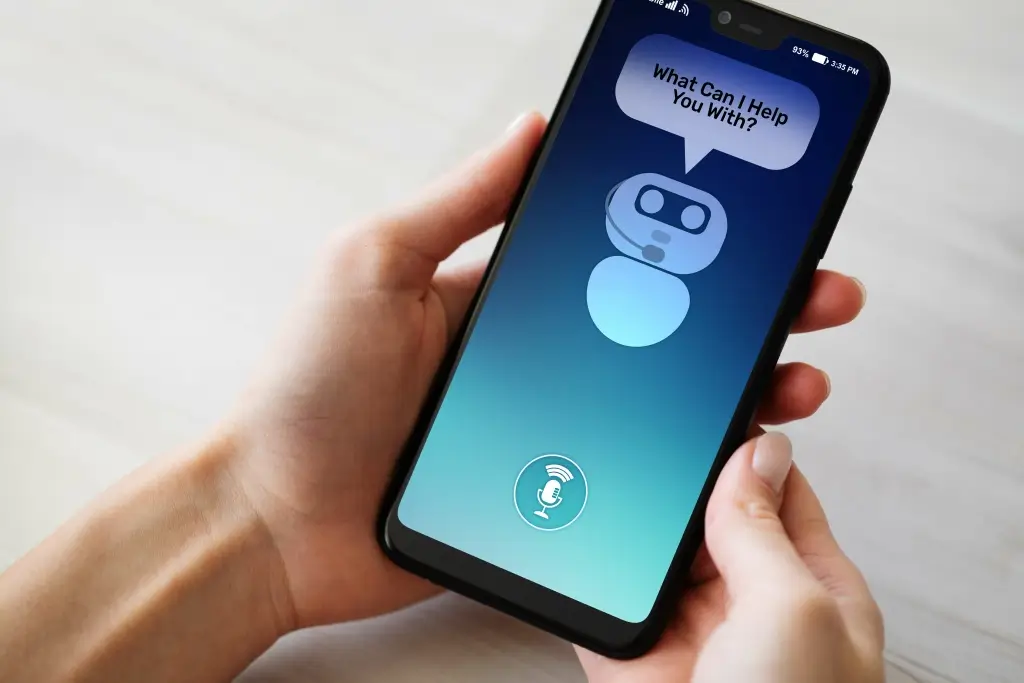
    What is great about this solution is that even people with no technical background can have an immediate access to leads data collected by a bot. A FAQ bot can start a chat with an open-ended question (e.g. “What can I help you with?”). But depending on your customers’ habits it could come with a risk of people not knowing what to say back. If that is the case, you can provide suggestions and show what topics are covered – quick replies and perfect for the job.

    You’re wondering which chatbot platform is the best and how it can help you. Well, this guide provides all the golden rules for implementing a chatbot. It points out the most common chatbot mistakes and shows how to avoid them. It can help you create an effective chatbot strategy and make the most out of chatbots for your online business.

    During the pandemic, ATTITUDE’s eCommerce site saw a spike in traffic and conversions. Here are three of the best customer service chatbot examples we’ve come across in 2022. Nevertheless, your bot should have a personality, as it contributes to building an emotional bond with the customer. Besides, it is a part of your brand image, adding to its recognition. Even though it is just a piece of software, give it a face, a name, and a voice tone according to your customer service standards. Make it one of the action points of your chatbot UI design.

    The same can be said for updating your custom-made chatbot or correcting its mistakes. If you’re unsure whether using an AI agent would benefit your business, test an already available platform first. This will let you find out what functionalities are useful for you. You’ll be able to determine whether you need to build it from scratch or not.

    Nightbot Mod Commands

    In the chat, this text line is then fired off as soon as a user enters the corresponding command. Streamlabs Chatbot can join your discord server to let your viewers know when you are going live by automatically announce when your stream goes live…. You can continue conversing with the chatbot and quit the conversation once you are done, as shown in the image below. Interact with your chatbot by requesting a response to a greeting.

    However, you can use any drawing software, such as Diagrams.net, Lucidchart, or Google Drawings, to sketch sequences and plan responses. It seems so simple at a glance, but in fact, a truly successful chatbot script is a product of hard work and thorough testing. You must not miss a single conversation turn and use all strategic points to create the best user experience.

    The energy drink brand teamed up with Twitch, the world’s leading live streaming platform, and Origin PC for their “Rig Up” campaign. DEWBot was introduced to fans during the eight-week-long series via Twitch. Chatbots can play a role in that connection by providing a great customer experience. This is especially when you choose one with good marketing capabilities. During the buying and discovery process, your customers want to feel connected to your brand.

    Think of the most common inquiries customers make and proceed from them. A good idea may be to prepare different responses for the same questions and rotate them. Before you start writing, think about where you would like your customers to interact with the chatbot. The best idea is to look at the buyer’s journey and see where they might need a little help. By the way, mapping a user journey is always recommended, whether you are using live chat or chatbot as your customer support channel. If you typed “How to write chatbot scripts” in your search box, you must have recognized the value and benefits a bot is going to bring to your business.

    Rule-based bots, as the name suggests, operate on a set of rules that you program for them. Their responses to users are triggered either by the choice the user makes or the keyword they recognize. There is a dialogue “tree” behind such conversations, where for each response a certain scenario is prescribed. Their automatic ranking boards give an incentive for your viewers to compete or donate. Features for giveaways and certain commands allow things to pop up on your screen. Donations are one of several ways that streamers make money through their channels.

    Google’s Gemini AI Now Lets Users Control YouTube With Chatbot Integration – Jagran English

    Google’s Gemini AI Now Lets Users Control YouTube With Chatbot Integration.

    Posted: Fri, 24 May 2024 07:00:00 GMT [source]

    An Alias allows your response to trigger if someone uses a different command. Customize this by navigating to the advanced section when adding a custom command. Learn more about the various functions of Cloudbot by visiting our YouTube, where we have an entire Cloudbot tutorial playlist dedicated to helping you. Chatbots that use scripted language follow a predetermined flow of conversation rules. They can’t deviate, so variations of speech can confuse them.

    Buttons are a great way to guide users through your chatbot story. They offer available options and let a user achieve their goals without writing a single word. If your message is too long for a greeting, plan it right after the welcome message. Make sure your customer knows what they can do with your chatbot. Many metrics can help you measure the efficiency of your chatbot.

    Some were programmed and manufactured to transmit spam messages to wreak havoc. We will arbitrarily choose 0.75 for the sake of this tutorial, but you may want to test different values when working on your project. If those two statements execute without any errors, then you have spaCy installed.

    Streamlabs Cloudbot is our cloud-based chatbot that supports Twitch, YouTube, and Trovo simultaneously. With 26 unique features, Cloudbot improves engagement, keeps your chat clean, and allows you to focus on streaming while we chatbot commands take care of the rest. Twitch commands are extremely useful as your audience begins to grow. You can foun additiona information about ai customer service and artificial intelligence and NLP. Commands help live streamers and moderators respond to common questions, seamlessly interact with others, and even perform tasks.

    Tools you can use in chatbot script creation

    This is a default command, so you don’t need to add anything custom. Go to the default Cloudbot commands list and ensure you have enabled ! Shopify chatbots allow you to offer customer service for your Shopify store without a live agent.

    • If you want to automate communication across many channels, it’s better to consider a multi-platform chatbot framework.
    • Interact with your chatbot by requesting a response to a greeting.
    • With different commands, you can count certain events and display the counter in the stream screen.
    • If you’re going to work with the provided chat history sample, you can skip to the next section, where you’ll clean your chat export.
    • To get started with chatbot development, you’ll need to set up your Python environment.

    Next, you’ll learn how you can train such a chatbot and check on the slightly improved results. The more plentiful and high-quality your training data is, the better your chatbot’s responses will be. We now have smart AI-powered Chatbots employing natural language processing (NLP) to understand and absorb human commands (text and voice). Chatbots have quickly become a standard customer-interaction tool for businesses that have a strong online attendance (SNS and websites). You’ll soon notice that pots may not be the best conversation partners after all. After data cleaning, you’ll retrain your chatbot and give it another spin to experience the improved performance.

    But while you’re developing the script, it’s helpful to inspect intermediate outputs, for example with a print() call, as shown in line 18. The call to .get_response() in the final line of the short script is the only interaction with your chatbot. And yet—you have a functioning command-line chatbot that you can take for a spin. After importing ChatBot in line 3, you create an instance of ChatBot in line 5.

    • It’s worth underlining that a rule-based chat interface can’t learn from past experiences.
    • Don’t quote whole chapters of your knowledge base, offer a link instead.
    • This is not about big events, as the name might suggest, but about smaller events during the livestream.

    The behavior of a rules-based chatbot can also be designed from A to Z. This allows companies to deliver a predictable brand experience. However, if anything outside the AI agent’s scope Chat GPT is presented, like a different spelling or dialect, it might fail to match that question with an answer. Because of this, rule-based bots often ask a user to rephrase their question.

    Design the right fallback message

    You’ll also create a working command-line chatbot that can reply to you—but it won’t have very interesting replies for you yet. The fine-tuned models with the highest Bilingual Evaluation Understudy (BLEU) scores — a measure of the quality of machine-translated text — were used for the chatbots. Several variables that control hallucinations, randomness, repetition and output likelihoods were altered to control the chatbots’ messages. To simulate a real-world process that you might go through to create an industry-relevant chatbot, you’ll learn how to customize the chatbot’s responses. You’ll do this by preparing WhatsApp chat data to train the chatbot. You can apply a similar process to train your bot from different conversational data in any domain-specific topic.

    Get expert social media advice delivered straight to your inbox. It saw a 90% automation rate for engaged conversations from November 2021 to March 2022. The personalized shopping cart feature, alongside their automated product suggestions and customer care services, helped to nurture sales.

    Chatbots make that possible by redefining the customer service people have known for years. Their AI assistant offers makeup tutorials and skincare tips and helps customers purchase products online. The company even enables its customers to try new makeup using AR technology implemented in their chatbot. By doing this, Sephora has delivered its personalized customer experience in-store and online.

    Indeed, bots are huge resource savers for a company and great experience boosters for its customers. Moobot emulates a lot of similar features to other chatbots such as song requests, custom messages that post over time, and notifications. They also have a polling system that creates sharable pie charts. By integrating into social media platforms, conversational interfaces let brands connect with many users and increase their brand awareness.

    Do you want to free your agents from answering same questions over and over again? Maybe you need to mix and match bot skills by creating an FAQ-Appointment bot hybrid? Use /bot (class) (amount) (weapon if preferrable) to spawn a bot or more.

    This chatbot gives a couple of special commands for your viewers. They can save one of your quotes (by typing it) and add it to your quote list. You can create a queue or add special sound effects with hotkeys.

    Improving your response rates helps to sell more products and ensure happy customers. It is one surefire way to elevate your customer experience. In fact, there are chatbot platforms to help with just about every business need imaginable. And the best part is that they’re available 24/7, so your digital strategy is always on.

    Step 1: Create a Chatbot Using Python ChatterBot

    Following her agency career, Colleen built her own writing practice, working with brands like Mission Hill Winery, The Prevail Project, and AntiSocial Media. Lemonade’s Maya brings personality to this insurance chatbot example. She speaks to users with a warm voice from a smiling avatar, which is in line with Lemonade’s brand.

    If your own resource is WhatsApp conversation data, then you can use these steps directly. If your data comes from elsewhere, then you can adapt the steps to fit your specific text format. You’ll get the basic chatbot up and running right away in step one, but the most interesting part is the learning phase, when you get to train your chatbot. The quality and preparation of your training data will make a big difference in your chatbot’s performance. If you are unfamiliar, adding a Media Share widget gives your viewers the chance to send you videos that you can watch together live on stream.

    In real life, developing an intelligent, human-like chatbot requires a much more complex code with multiple technologies. However, Python provides all the capabilities to manage such projects. The success depends mainly on the talent and skills of the development team. Currently, a talent shortage is the main thing hampering the adoption of AI-based chatbots worldwide. Because of the custom commands feature of Nightbot, there are so many of them that it will be hard to keep up with everything.

    This logic adapter uses the Levenshtein distance to compare the input string to all statements in the database. It then picks a reply to the statement that’s closest to the input string. The subsequent accesses will return the cached dictionary without reevaluating the annotations again. Instead, the steering council has decided to delay its implementation until Python 3.14, giving the developers ample time to refine it. The document also mentions numerous deprecations and the removal of many dead batteries creating a chatbot in python from the standard library.

    Typically social accounts, Discord links, and new videos are promoted using the timer feature. Before creating timers you can link timers to commands via the settings. This means that whenever you create a new timer, a command will also be made for it. Having a public Discord server for your brand is recommended as a meeting place for all your viewers.

    Whether you want build chatbots that follow rules or train generative AI chatbots with deep learning, say hello to your next cutting-edge skill. In today’s digital age, where communication is increasingly driven by artificial intelligence (AI) technologies, building your own chatbot has never been more accessible. As technology continues to evolve, developers can expect exciting opportunities and new trends to emerge in this field. You have created a chatbot that is intelligent enough to respond to a user’s statement—even when the user phrases their statement in different ways. The chatbot uses the OpenWeather API to get the current weather in a city specified by the user.

    chatbot commands

    In this tutorial, you’ll start with an untrained chatbot that’ll showcase how quickly you can create an interactive chatbot using Python’s ChatterBot. You’ll also notice how small the vocabulary of an untrained chatbot is. Your guide to why you should use chatbots for business and how to do it effectively. L’Oréal was receiving a million plus job applications annually. That’s a huge volume of candidates for an HR team to qualify. L’Oréal’s chief digital officer Niilesh Bhoite employed Mya, an AI chatbot with natural language processing skills.

    Your customers like chatting to humans before making a final decision? Use Transfer to agent action, so when your customer needs a human help they can get it right away. As we mentioned before, bots can send and receive data from external apps through webhooks. So, for example, information provided by leads can be sent automatically to a Google Sheets file.

    Well, you can try to turn your old boring form into a fun experience. If it matches your brand’s voice, your bot can use gifs, emojis or send a link to a youtube video to make it more interesting. In a nutshell, webhooks let one app (like Chatbot) send and receive data from other apps and databases. If you want to know more, read this Chatbot tutorial on webhooks. Please note, this process can take several minutes to finalize.

    Boost your customer service with ChatGPT and learn top-notch strategies and engaging prompts for outstanding support. Of course, these chatbot scripts are far from exhaustive, but they just might spark your creativity. Add them to your bot design, mix, amend, and tweak as necessary. Also, calling the customer by name has a very practical value, too.

    Based on the applied mechanism, they process human language to understand user queries and deliver matching answers. There are two main types of chatbots, which also tell us how they communicate — rule-based chatbots and AI chatbots. This not only elevates the user experience but also gives businesses a tool to scale their customer service without exponentially increasing their costs.

    It could be an e-mail address and issue description (like in our example above). Chatbot can return this information in chat, e.g. to confirm if saved data is correct. What’s more, collected data can be passed on to external databases – so following our example, your agents can have all these messages stored in one file. Timers can be an important help for your viewers to anticipate when certain things will happen or when your stream will start.

    Feel free to use our list as a starting point for your own. Similar to a hug command, the slap command one viewer to slap another. The slap command can be set up with a random variable that will input an item to be used for the slapping. Here’s everything you need to know about https://chat.openai.com/ getting started with Streamlabs Desktop. After creating your cleaning module, you can now head back over to bot.py and integrate the code into your pipeline. For this tutorial, you’ll use ChatterBot 1.0.4, which also works with newer Python versions on macOS and Linux.

    The design of the chatbot is such that it allows the bot to interact in many languages which include Spanish, German, English, and a lot of regional languages. Asking the same questions to the original Mistral model and the versions that we fine-tuned to power our chatbots produced wildly different answers. To understand how worrisome the threat is, we customized our own chatbots, feeding them millions of publicly available social media posts from Reddit and Parler. AI SDK requires no sign-in to use, and you can compare multiple models at the same time. Commands can be used to raid a channel, start a giveaway, share media, and much more.

    Check and see how many conversations your chatbot is having and which of the interactions are the most popular. Provide more information about trending topics, and get rid of elements that aren’t interesting. The best way to poke and probe your chatbot is to give it to beta testers.

    Once you are on the main screen of the program, the actual tool opens in all its glory. In this section, we would like to introduce you to the features of Streamlabs Chatbot and explain what the menu items on the left side of the plug-in are all about. Find out how to choose which chatbot is right for your stream.

    The company has used a Messenger bot to carry out a daily quiz with users. Artificial intelligence chatbots need to be well-trained and equipped with predefined responses to get started. However, as they learn from past conversations, they don’t need to be updated manually later. At this point, it’s worth adding that rule-based chatbots don’t understand the context of the conversation. They provide matching answers only when users use a keyword or a command they were programmed to answer. When a chatbot sends a lot of messages one after another, a user can’t keep up with reading them and needs to scroll back.

  • How Early Movers Are Realizing AIs Promise

    How AI Is Revolutionizing Retail: Exclusive Insights From An Industry Expert

    ai trends in retail

    This efficient system ensures quick and hassle-free order retrieval for customers. Ever found yourself lost in a department store, unsure of where to locate the item you need? Macy’s introduces Chat GPT the On Call app, customized for each individual store, to address this challenge. Use AI in retail to differentiate your retail strategy, drive personalization, and increase profits.

    • In collaboration with brands such as Volvo and Porsche, Google is experimenting with an AR feature for cars.
    • May 19, 2023The European grocery sector is expected to begin its recovery in the second half of this year after experiencing substantial cost pressure in 2022.
    • Advanced technologies ensure inventory availability and visibility across several sales channels.

    Augmented reality offers more visual information than standard, 2D images. For instance, customers can spin items around to see how they look from every angle. In other words, if your business isn’t using AI yet, you’re already behind.

    AI in retail use case: Sephora’s virtual artist app

    Offering assistance and answering queries instantly can often be the difference between making a sale and losing a potential customer. AI-driven chatbots and virtual shopping assistants are now filling this role 24/7. Edmonds explained how using Microsoft Azure OpenAI Service, CarMax summarizes thousands of customer reviews into concise, readable summaries on its nearly unending product detail pages. “This approach not only enhances SEO but also provides valuable insights to potential buyers,” Edmonds said. Artificial intelligence isn’t just for tech gurus—it’s a game-changer for everyone from business executives to real estate agents and even busy parents. Whether you’re a seasoned professional or simply curious about AI, mastering these five practical skills will help you harness the power of AI without needing to write a single line of code.

    Software product development teams that utilize agile methodologies hold an advantage to boost their development speed, expand team engagement, and nourish the ability to respond to market trends quickly. Elevate your warehouse inventory management system with low-code tech – real-time tracking, accessible and efficient for businesses of all sizes. These kiosks display a range of products and measure customers’ reactions to colors and styles through their neurotransmitters.

    From drug discovery to virtual nursing assistants, AI reshape healthcare interactions, delivering superior care and cost savings for improved experiences. Safeguard critical information, ensure continuity, and thrive in a tech-driven world. Discover the types of data analysis, gaining an edge in today’s business world. Unlock insights from vast data oceans and make informed decisions confidently. Every day, the world brings so many new things to the table, and thus, learning is necessary to keep up with the rapid evolution, particularly in the technological space.

    Uniqlo, a clothing store at the forefront of innovation, utilizes the power of science and AI to offer a truly unique in-store experience. As one of the world’s largest retail chains, Walmart is leveraging robots to optimize their extensive store aisles. In selected stores, Walmart is piloting shelf-scanning robots that diligently monitor inventory. Taco Bell revolutionized the industry by introducing AI-powered food ordering. Through the Tacobot integrated with Slack, customers can conveniently text or voice their orders. However, it is also critical to consider the potential disadvantages, such as data security, job displacement, biased algorithms, etc., and find ways to limit their impacts.

    “Cloud management streamlines a wide range of common tasks, from provisioning and scaling to security and cost management, and from monitoring and data migration to configuration management and resource optimization,” he said. However, successful AI integration demands more than just technological investment. It requires a paradigm shift in mindset—a willingness to challenge traditional practices and embrace data-driven decision-making. Dealerships must foster a culture of continuous learning and adaptation, where AI is seen not as a threat but as a powerful ally in delivering exceptional customer experiences. The predictive power of AI enables hyper-personalized marketing and service recommendations. Instead of bombarding all customers with generic offers, dealerships can tailor their outreach based on each customer’s unique situation and preferences.

    24/7 Digital Showrooms: AI Chatbots Will Redefine Car Shopping

    Your small or medium business, on the other hand, will have a great chance of prospering in the online marketplace if you follow the procedures outlined in this article. Getting assistance from a well-established web development company can do wonders. RPA for telecom holds tremendous potential to address issues such as inconsistent bandwidth, poor customer support, fraud, and others. Learn about top trends in low code application trends in 2023 including the rise of web3, 5G enabled better bandwidths, rising IT resource costs and more. Explore the top 10 low-code platforms for enterprise application development in 2023.

    The S Pen is just one part of an experience that is perfect for some use cases; as it turns out, moving home is one of them, and the Galaxy Z Fold 6 will be the phone I will rely on during this house move. Fire up the camera, hold the bottom bar, and draw a circle around or tap on the item. Let Galaxy AI do the heavy lifting and ensure you’re well-priced on everything. I’ve sold hundreds of items on eBay and Facebook Marketplace, and pricing is the hardest part. Circle to Search makes it easy to understand the true value of your items and price them accordingly. I still find it annoying that the S Pen only works on the main display.

    Putting the AI in Retail: Survey Reveals Latest Trends Driving Technological Advancements in the Industry – NVIDIA Blog

    Putting the AI in Retail: Survey Reveals Latest Trends Driving Technological Advancements in the Industry.

    Posted: Tue, 09 Jan 2024 08:00:00 GMT [source]

    As technology advances, retail organizations are exploring various AI applications to stay competitive in the evolving industry. Aside from personalizing your marketing efforts, some advanced AI tools can help the customer get the full experience for how they’ll use the product before they buy. For example, someone shopping for furniture can upload a photo or room measurements and the AI can create an image showing exactly how the piece would look in the home. One of the pioneers of using AI technology to manage its inventory is retail giant Walmart. Cameras attached to their floor scrubbers help calculate remaining inventory on the shelves, taking more than 20 million photos per day across all stores. That info is all sent to an AI-powered data center, which then makes appropriate adjustments to the inventory for every store.

    Uniqlo Enhances the Shopping Experience with AI Mind Reading

    These insights can be used for personalization, product management, price optimization, and  streamlining store and warehouse operations, driving more sales. The ubiquity of smartphones makes mobile technologies like shopping apps, mobile payment systems, and personalized marketing via phones inevitable in retail. Two-thirds of shoppers use their phones to look for more product information while shopping in-store. You can foun additiona information about ai customer service and artificial intelligence and NLP. Further, mobile commerce or m-commerce, the shopping that happens exclusively via mobile phones, is set to exceed 10%of all retail transactions in the U.S. by 2025.

    Sankaran said AI is supercharging autonomous cloud management, making the vision of self-monitoring and self-healing systems viable. AI-enabled cloud management enables organizations to provision and operate vast, complex multi-cloud estates around the clock and at scale. These capabilities can increase uptime and mitigate risks to drive greater business potential and client satisfaction. Beyond just fixing problems, AI in self-healing systems can also continuously optimize performance based on learned patterns and changing conditions by using machine learning to improve over time. “The AI learns from past incidents and outcomes, becoming more accurate in both problem detection and resolution,” Kramer said. A process that might take human administrators hours or days can be completed by AI in seconds or minutes.

    ai trends in retail

    When you’re on the Pinterest app, you can take a picture of anything and Pinterest will help you find relevant items. For instance, if the customer points their camera at an ingredient, the app will show them recipes. Because this visual search function was so successful, Pinterest recently launched a “Shop” tab, that shows shoppable pins based on in-stock products the app identifies. Some retailers have been quick to embrace technological advancements, particularly in artificial intelligence (AI), and have reaped the benefits in terms of revenue and growth. The notable aspect of this trend is that you need both high-quality data and an integrated ecosystem.

    Its AI, known as the Walmart Intelligent Retail Lab (IRL), uses machine learning algorithms to predict sales trends, manage stock levels, and automate warehouse processes. Overall, the use of AI in retail is transforming how we shop and making the experience more personalized, sustainable, and convenient. Another way AI is changing retail is through inventory management and instant support. Retailers can employ AI-powered systems to optimize inventory levels, forecast demand, and automatically reorder stock when needed. They can also improve the shopping experience through AI-powered tools at any time of the day. AI has already made a big impact on the retail industry—and it’s here to stay.

    American Eagle is reimagining the traditional fitting room experience by introducing interactive dressing rooms of the future. Customers can easily scan the items they wish to try on and instantly view their availability in-store. By evaluating skin health, the app offers tailored recommendations for addressing specific concerns and suggests a personalized skincare regimen to achieve optimal results.

    Beyond sentiment analysis and personalization, AI can also help in logistics and supply chain optimization. NeuroMLR is a new and growing area of interest that combines neural networks and multiple linear regression (MLR) for machine learning tasks. It aims to enhance the interpretability of traditional neural networks, which can sometimes be difficult to understand due to their complex structure.

    By leveraging predictive analytics to gain comprehensive market insights, retailers can proactively lead with innovation instead of being reactive to shifts in the industry. AI in retail is the use of artificial intelligence algorithms and technologies, like computer vision, natural language processing, and machine learning, in various aspects of the retail industry. It is reshaping the entire shopping experience from personalization and customer service to inventory management. Alibaba’s Hema Supermarkets symbolize the ultimate AI-powered retail invention, algorithms, and sensors being used in combination with real-time data to provide real-time feedback for customers. These neural stores include face recognition and cashier-less checkout systems that create a different consumer experience from the old retail store.

    Powered by computer vision, this technology makes it possible for consumers to find exact and similar products through images. AI has enabled the use of AI-powered chatbots that make it possible to provide customer support, attend to customer queries, and recommend products throughout the day. All retailers know that managing inventory is a precarious balancing act. On one hand, you need to keep enough inventory in stock to meet the needs of your customers.

    This enables automated deployment and configuration of the edge infrastructure managed by NativeEdge, while ensuring a zero-trust chain of custody. Built on an open design, Dell NativeEdge offers retailers the flexibility to choose the ISV applications and multicloud environments for chosen edge application workloads. Organizations can leverage blueprints to centrally and consistently deploy containerized or virtualized applications. Are you fully prepared and ready to unleash AI to its full potential in your retail strategy?

    They’re not built for a specific purpose like chatbots of the past — and they’re a whole lot smarter. As AI capabilities evolve, cloud management will become more automated and autonomous. Sankaran believes AI cloud management will ai trends in retail be as seminal as when cloud computing came onto the scene. Those who invest in AI for cloud management will unlock opportunities to operate at the speed of business as they eliminate technical debt, innovate and modernize, he said.

    Solutions

    In the new year, retailers can leverage technologies to help reduce their environmental footprint. Read more about why flexible order sourcing is essential in today’s world. The agile product development methodology is a repetitive approach to handling software development projects that emphasize managing regular product releases based on user feedback on each iteration.

    Recurring revenue business models like SaaS have proven to deliver greater financial predictability, better insights into the customer’s preferences and wants, and provide much greater flexibility to business processes. The entire purpose of setting up an offshore development center is to bring scalable technology resources, letting you eliminate the needless expenses. Generally, the client company has direct control of the offshore software development center and its services through a project manager who interacts with the team members involved in the project processes.

    ai trends in retail

    Hire dedicated AI developers who can customize to the specific needs of your business as well. Whether it is providing customers with your experience, optimizing your inventory management, or making your operations more efficient, our team is here to help you see the potential offered by AI. It is not enough to just accept the future of retail, and be the frontrunner in AI. Beyond simple automation, the blend of artificial intelligence and retail has the ability to completely alter industries by improving consumer experiences, streamlining processes, and spurring economic expansion.

    The fascinating aspect is that customers don’t even need to press a button; the system interprets their brain signals to gauge their preferences for each item. According to a study from Mordor Intelligence, the market size of AI in retail is expected to grow from USD 7.3 billion in 2023 to USD 29.45 billion in 2028 at a compound annual growth rate of 32.17%. To explore more, check out our article on the use of generative AI in the supply chain. Or personalizing the display options according to customer choice is another option. The video below shows an example of the AI generated 3D models that can be implemented in product displays. Further, Brad LaRock and Koopmans also underscored the need for comprehensive employee training on the new technologies.

    Blockchain, Internet of Things (IoT), and transportation management systems are just some technologies making the supply chain “green”. The result is better control of the distribution process, including environmental impact. No longer can brands rely solely on offering the best prices or value to attract customers.

    With the advent of Artificial Intelligence (AI), the retail landscape has undergone a profound transformation. From personalized recommendations to seamless inventory management, AI is revolutionizing how businesses operate and how consumers shop. Data integrations and analytics provide a 360-degree view of customer shopping behavior and also visibility into inventory. Integrating granular store-level data collected from online and brick-and-mortar stores provides retailers with unprecedented insight, added Brad LaRock of Datasembly.

    Other smart store technologies that retailers need to consider include cameras and sensors that provide a 360-degree view of the customers added Campbell. Combined with RFID and advanced video analytics, they are a powerful tool to analyze customer journeys in-store. They can show a complete picture of the retail space, how people move through a store over time, what section is explored or not explored, or which section needs more staff.

    It represents a self-regulating quality embedded within the AI system itself. Artificial Integrity is a built-in capability within AI systems that ensures its functions not just efficiently, but also with integrity, respecting human values from the very start. In the rapidly evolving world of Artificial Intelligence (AI), computational power isn’t enough. What we need is Artificial Integrity—a new paradigm that ensures AI systems operate in alignment with human values, prioritizing Integrity over Intelligence, whether it is in Marginal, AI-First, Human-First or Fusion Modes. A human-centered illustration composed of colorful puzzle pieces, symbolically representing the …

    At NRF 2024, Dell Technologies hosted a “Big Idea” session focused on responsible use of AI in retail. Traditional forms of AI are important to provide insights that can be leveraged across broader use of Generative AI models. Using Computer Vision as an example, we can see customer traffic patterns, identify potential risks, reduce loss and improve frictionless shopping. Coupling data from computer vision with inventory can help improve stocking priorities.

    How Early Movers Are Realizing AI’s Promise

    This process condenses a large set of opinions into a concise summary, providing businesses with actionable insights and a clear picture of customer needs. From interactive chatbots to augmented reality, artificial intelligence (AI) presents retailers and brands with a wealth of opportunities to experiment with and benefit from. With the right investments and practices, your company can reduce costs in talent management, contact-center automation, and warehouse automation, among other areas. This technology uses machine learning algorithms to monitor video feeds, identify suspicious behavior, and alert security personnel instantly.

    Personalized messaging can be inserted into targeted email campaigns, on websites, or in other customized marketing activities. When customers feel they are being treated as individuals, they may feel a sense of loyalty to a brand. It guides retail marketers in data-driven decision-making, revolutionizes marketing forecasting, and analyzes user data to create highly personalized and targeted campaigns. One of the most game-changing impacts of AI and deep learning to retail is in the area of personalization. Remember the times when salespeople would recognize you and suggest products based on your past purchases?

    NeuroMLR can be a game-changer in the field of retail transformation by providing an efficient solution for route optimization. It can analyze complex data and provide insights on the best routes to take for maximum efficiency. In fact, 66% of consumers said that 3D and AR would increase their confidence that they’re buying the right product, and that they’d be more interested in shopping on a website that offers that option. Augmented reality (AR) is arguably the most impressive AI trend in retail and ecommerce. Customers being able to actually inspect products in 3D — instead of just looking at pictures — is helping to bring the brick-and-mortar store fully online.

    ai trends in retail

    Research from Insider Intelligence finds that more than two-thirds of social buyers are under 44, with about one-quarter being between 25 and 34. If brands want to increase engagement with these audiences, they must consider social commerce. Through automation, retailers can determine the best warehouse to collect goods for fulfillment. They allow direct communication and interaction between different software systems, enabling them to work together efficiently regardless of their underlying architectures. This allows organizations to create custom solutions tailored to their specific needs, fostering innovation and rapid development cycles. The market is saturated with product development agencies, and choosing the right one can be a bit tedious.

    The AAA games that want to beat other fall titles to the punch oftentimes come out in August, while several indie games launch as it’s their last chance to get some time in the limelight before a crowded fall. Last year, August even brought us the release of eventual Game of the Year winner Baldur’s Gate 3. Naysayers claim it’s nothing special, and while I both agree and disagree (as I’ll explain), it took one single photo from a comparison with another folding phone for me to truly understand where the root of the problem lies. The S Pen plays a large part, but the Galaxy Z Fold 6 is not the only foldable with Pen support. The Oppo Find N3 — which has identical hardware to the OnePlus Open — also supports a stylus.

    All that will result in memorable and streamlined customer experiences. For example, Walmart started using big data analytics years ago for various reasons, including optimizing the supply chain and personalizing experiences. More recently, AI analytics has been used to achieve a fully omnichannel experience by combining insights from various channels. By predicting what consumers are interested in and are more likely to buy, companies can offer automatic suggestions to increase engagement and conversions. In addition to predicting purchases based on a person’s behavior, AI can also extract insights for different locations, countries, age groups, genders, and more. Google recently launched an upgraded visual search tool (using Google Lens) that helped users find items they photographed in online stores.

    The best part is that you can opt for retail software development solutions and customize them according to your project scope or business objectives to get more benefits and advantages tailored to your vision. There many areas of business where retailers can use artificial intelligence to improve efficiency, drive down costs, and improve customer experience. Getting the best results, however, requires a combination of the right investments in both technology and people.

    You can enhance your customer’s shopping experience as AI can reduce waiting and streamline the payment process securely. AI retail software solutions quickly scan items https://chat.openai.com/ and estimate the total costs while processing transactions without any human intervention. This improves the retail company’s efficiency, accuracy, and customer service.

    The latest AI trends have shaped how businesses can interact with their customers. AI helps businesses get the necessary information about consumer behavior, personalize interactions, and make improvements in various phases of their business. Experts pointed out the need for making targeted investments to run pilots instead of widespread adoption at the first go. For instance, IKEA ran multiple pilots at its warehouses with a number of vendors before scaling the usage of drones for inventory management. Such pilots help assess the real-world impact of the technology within a controlled environment and gather valuable feedback from employees and customers. For this, retailers can leverage cloud data integration solutions and e-commerce data integration software to combine data from different channels and use analytics platforms powered by AI and ML to get actionable insights.

    • Experts estimate that by 2028, 15 billion connected products could act as autonomous customers, optimizing demand-supply matching in real-time and reshaping supply chains, sales, and customer service.
    • Then, they can adjust inventory levels to lower costs and avoid understocking.
    • AI also helps retailers improve their in-person and online stores by assisting with skill sets they might not possess.
    • It aims to enhance the interpretability of traditional neural networks, which can sometimes be difficult to understand due to their complex structure.
    • This article will explore the future of AI in retail, provide recent examples, and discuss how AI benefits the industry as a whole.

    To reap some of these benefits for your business, look for software that will allow you to quickly and easily launch a chatbot on your website. For example, Acquire’s chatbots — part of a powerful customer experience platform — can help you increase engagement and revenue as well as automate a good chunk of your support operations. This would allow your business, for example, to know where your visitors are coming from, what they’re looking for most often, which pages they linger on, and so on.